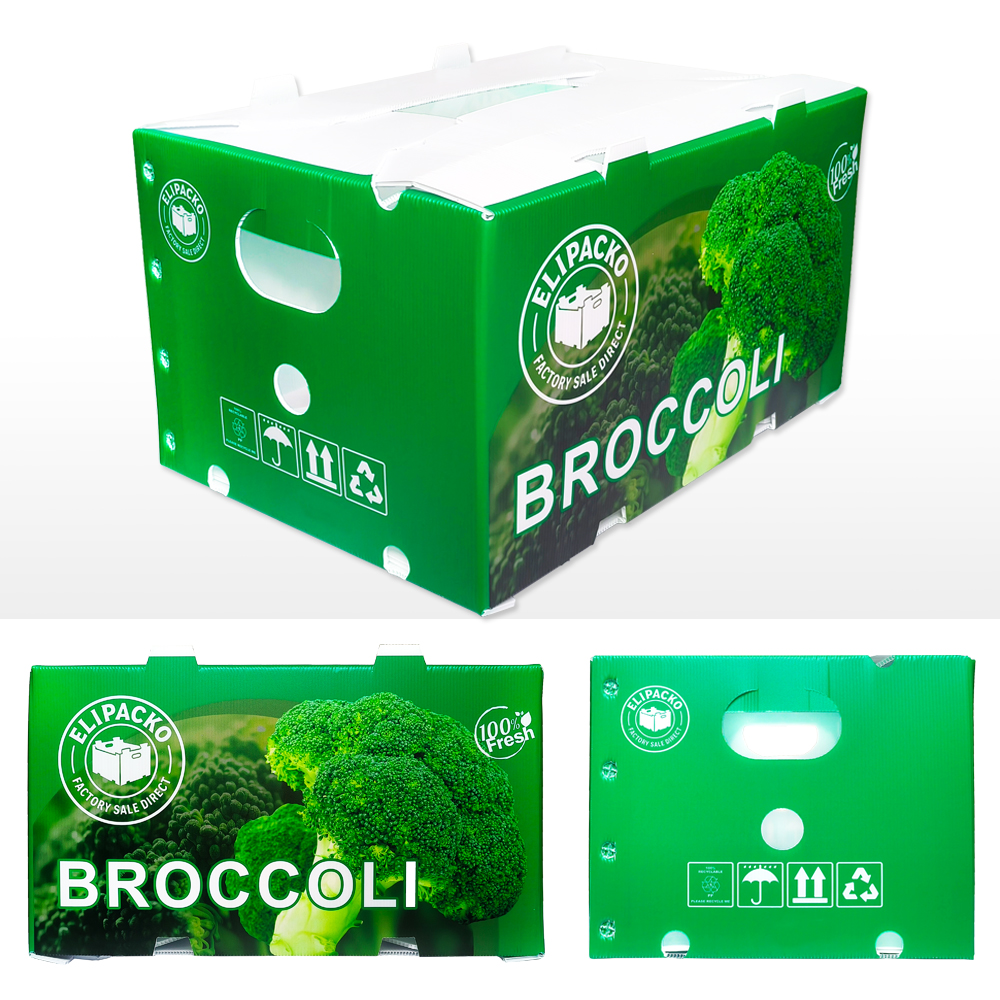
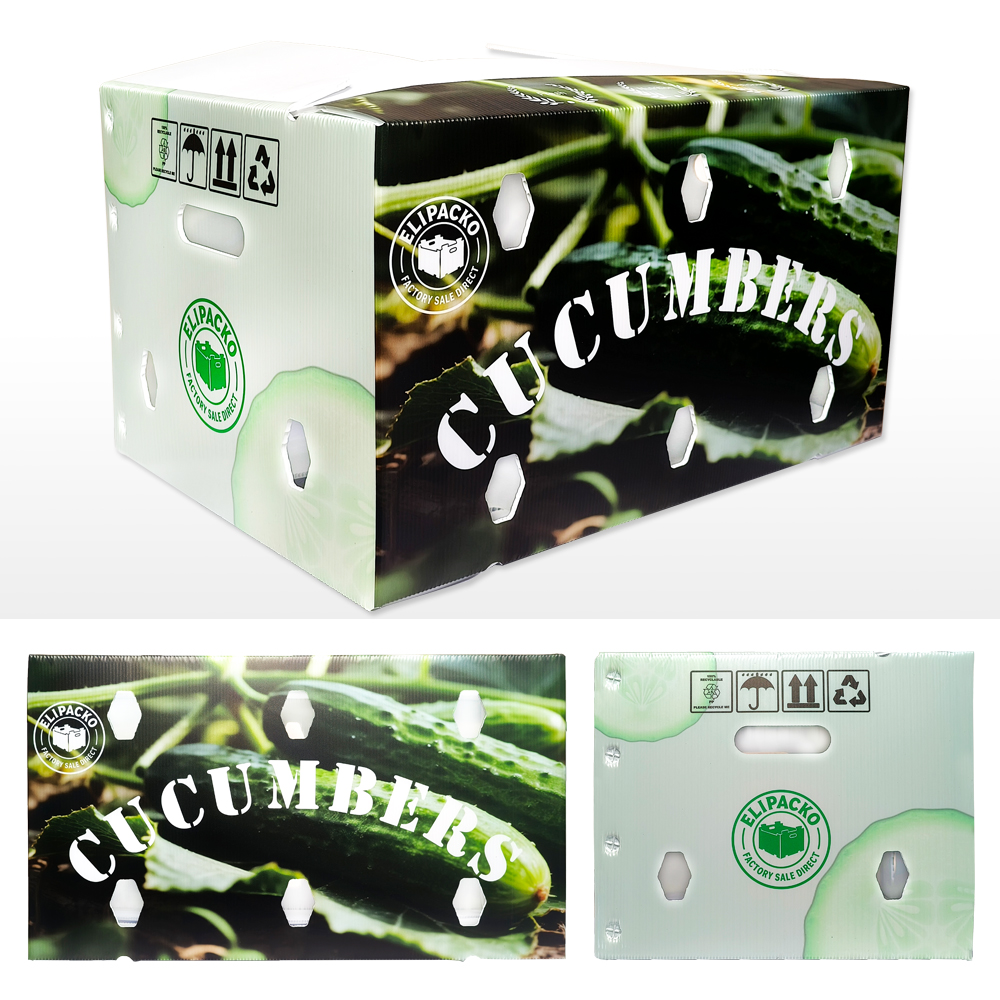

Design Detail
Ventilation Design — Why It Matters
Ventilation in a produce crate isn't just about appearance — the hole pattern, size, and percentage of open area directly affect ethylene buildup, cooling rate, and postharvest shelf life. A crate with inadequate ventilation in a cold store creates local warm spots that accelerate ripening and reduce shelf life for the entire pallet load.
Vent Percentage by Crop Type
- Leafy greens and herbs: 25–35% vent area — maximum airflow to prevent heat buildup and ethylene concentration
- Tomatoes and peppers: 10–20% — moderate ventilation, structural integrity more important
- Root vegetables: 5–15% — minimal ventilation, focus on load capacity and water drainage
- Citrus: 15–25% — balance of airflow and structural strength for high stacking
Elipacko can produce custom vent patterns engineered for your specific crop and cold-chain configuration. Standard vent patterns (round holes, rectangular slots, diamond pattern) are available without custom tooling costs on volume orders.