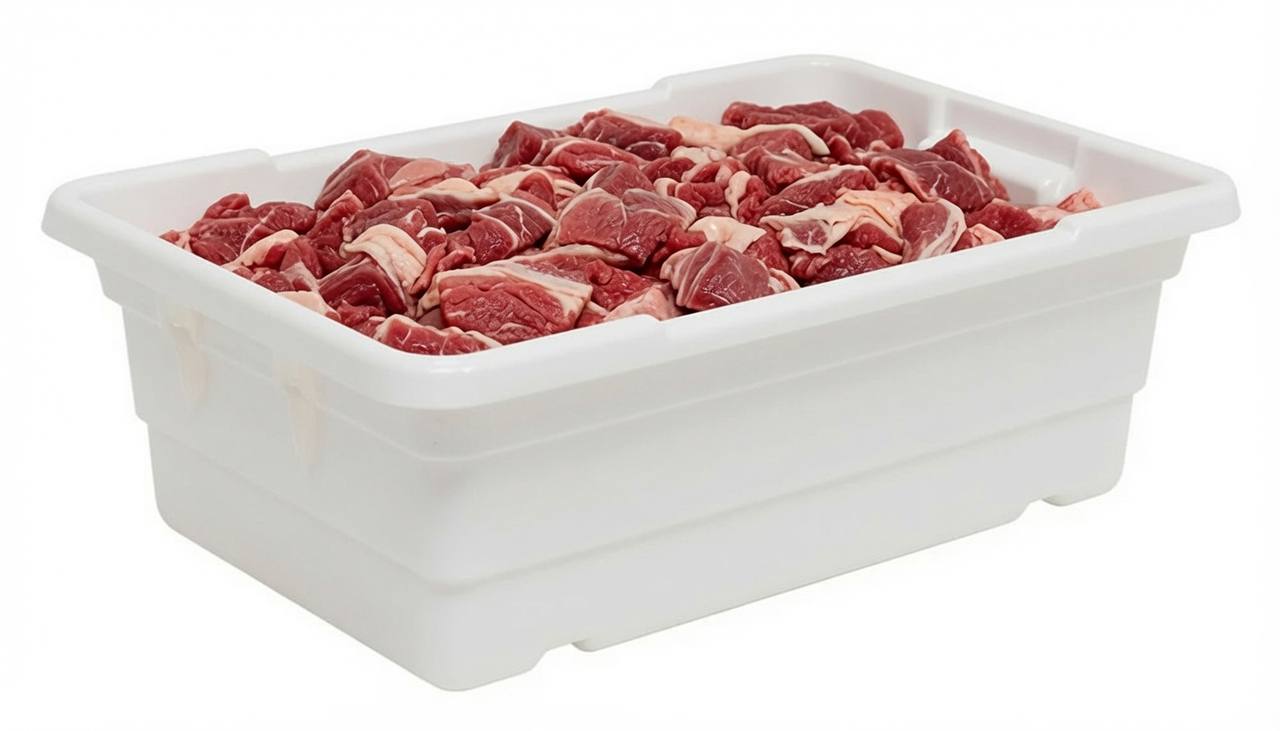
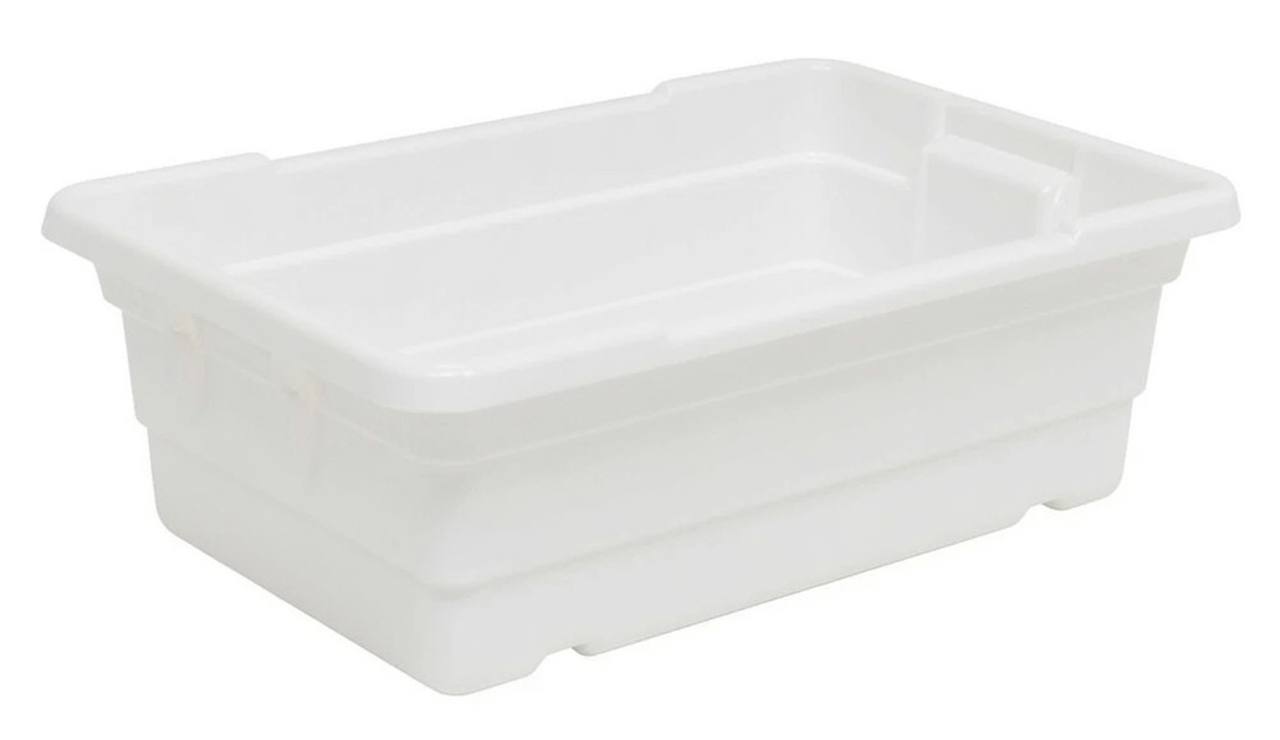
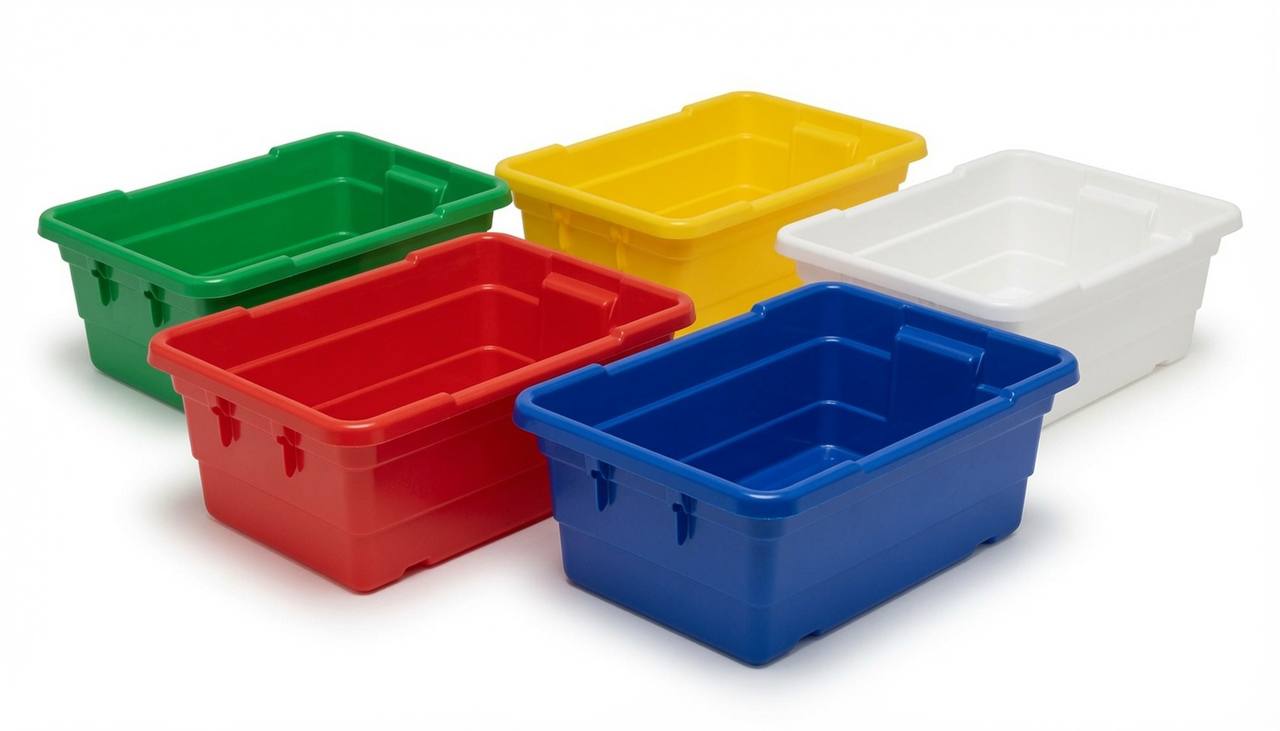
Purpose-built corrugated plastic packaging for temperature-controlled logistics. Seafood, fresh produce, pharmaceutical, and frozen food. No compromise from cold room to delivery.
Cardboard loses 30–50% of compression strength when exposed to moisture and cold. PP corrugated maintains rated compression strength at −40°F, wet or dry. Your stack height is predictable from cold room to dock to delivery.
PP is non-absorbent. Condensation, melt water, and ice contact do not penetrate or weaken the structure. No delamination, no wet board failures, no collapsed stacks mid-transit.
Rapid temperature drop in blast-freeze tunnels does not cause brittleness, delamination, or dimensional change in PP corrugated. The same box can enter a blast freezer directly after packing and hold its shape across the full frozen supply chain.
After each use, pressure-wash with food-grade sanitiser. PP corrugated tolerates steam cleaning up to 212°F. No residual odor or bacterial harbourage. Ready for the next cold load within minutes of wash.
PP corrugated boxes accept foam, reflective foil, and vacuum insulation panel liners for extended temperature hold. Liner fits inside the PP outer and is removed for washing and reuse independently.
No wood fiber, no fumigation requirement. PP corrugated cold chain boxes can ship to any international destination without heat-treatment or ISPM 15 documentation — a significant export compliance advantage over wood-composite packaging.
Specifying PP corrugated for cold chain applications requires understanding how wall thickness, polymer grade, and box construction affect performance across the full temperature and handling cycle. Here's what procurement teams and supply chain engineers need to know:
PP corrugated retains mechanical properties across its full temperature range (−40°F to 212°F) regardless of wall thickness. However, thicker walls provide greater stack strength and resistance to lateral impact — both critical in cold chain environments where boxes are handled in gloves, moved by forklift, and stacked in tight cold room configurations. Standard cold chain recommendation: 6mm for produce and protein applications; 8mm for blast-freeze environments and heavy seafood totes; 4mm for lightweight pharmaceutical inserts.
PP corrugated sheet is manufactured from either homopolymer PP (higher stiffness, slightly more brittle at low temperatures) or copolymer PP (better impact resistance at cold temperatures, slightly lower stiffness). For cold chain applications — particularly blast-freeze cycles where boxes experience rapid temperature changes — copolymer PP is the preferred specification. Elipacko uses PP copolymer as standard for all cold chain packaging products.
Cold chain PP corrugated boxes are typically constructed with metal rivets or PP heat-welded corners rather than adhesive or tape — cold temperatures cause adhesive to fail, and tape loses grip below 32°F. Drain plug options (removable grommet) allow ice melt drainage in seafood and produce applications without compromise to box structural integrity. Lid-and-base configurations with positive retention clips prevent lids from popping off during forklift movement in cold rooms.
| Cold Chain Application | Recommended Wall | Key Construction Feature | Temperature Range |
|---|---|---|---|
| Fresh produce (ambient cold room) | 4–6mm | Vent holes, open-top | 32°F to 45°F |
| Fresh seafood (iced) | 6mm | Drain plug, riveted corners | 28°F to 34°F |
| Blast-freeze (IQF) | 6–8mm copolymer | No drain, sealed base | −40°F to −20°F |
| Frozen storage/distribution | 6mm | Lid + clip retention | −20°F continuous |
| Pharmaceutical (insulated) | 4mm outer + liner | Liner-compatible interior | 2°C to 8°C hold |