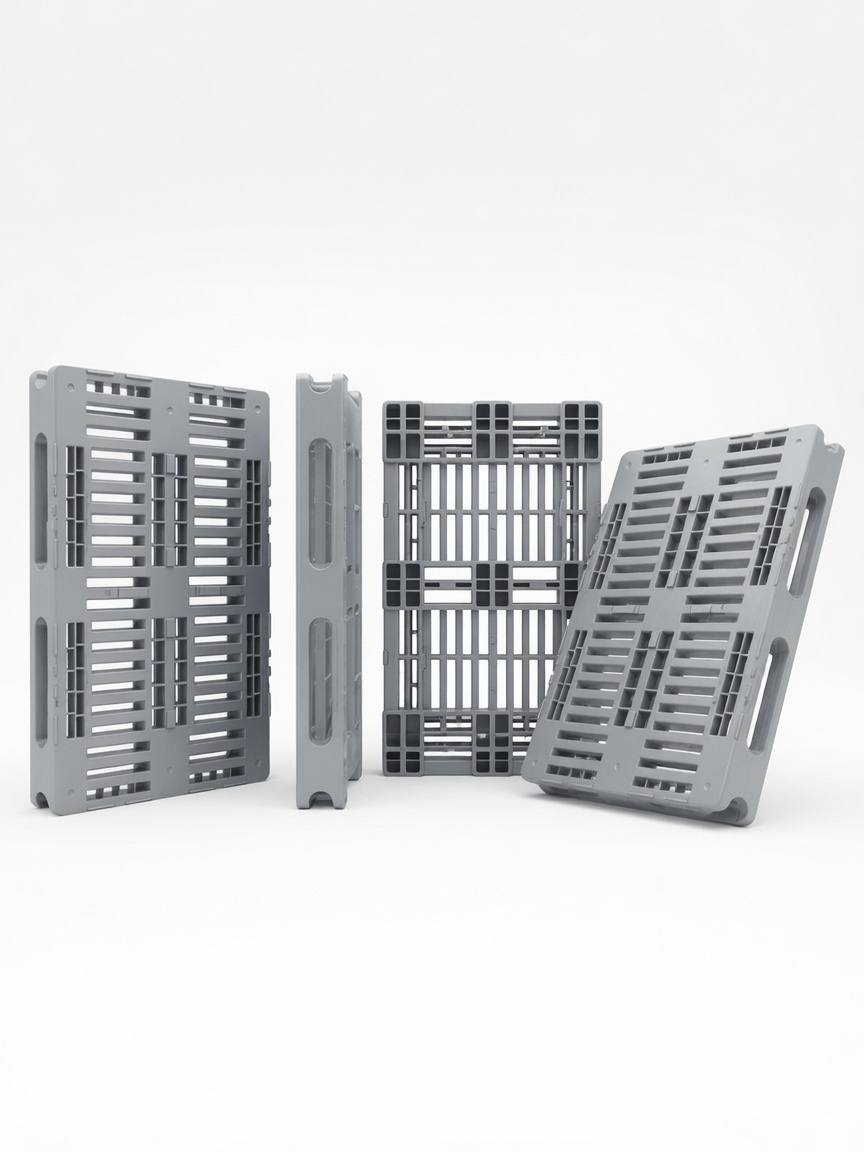
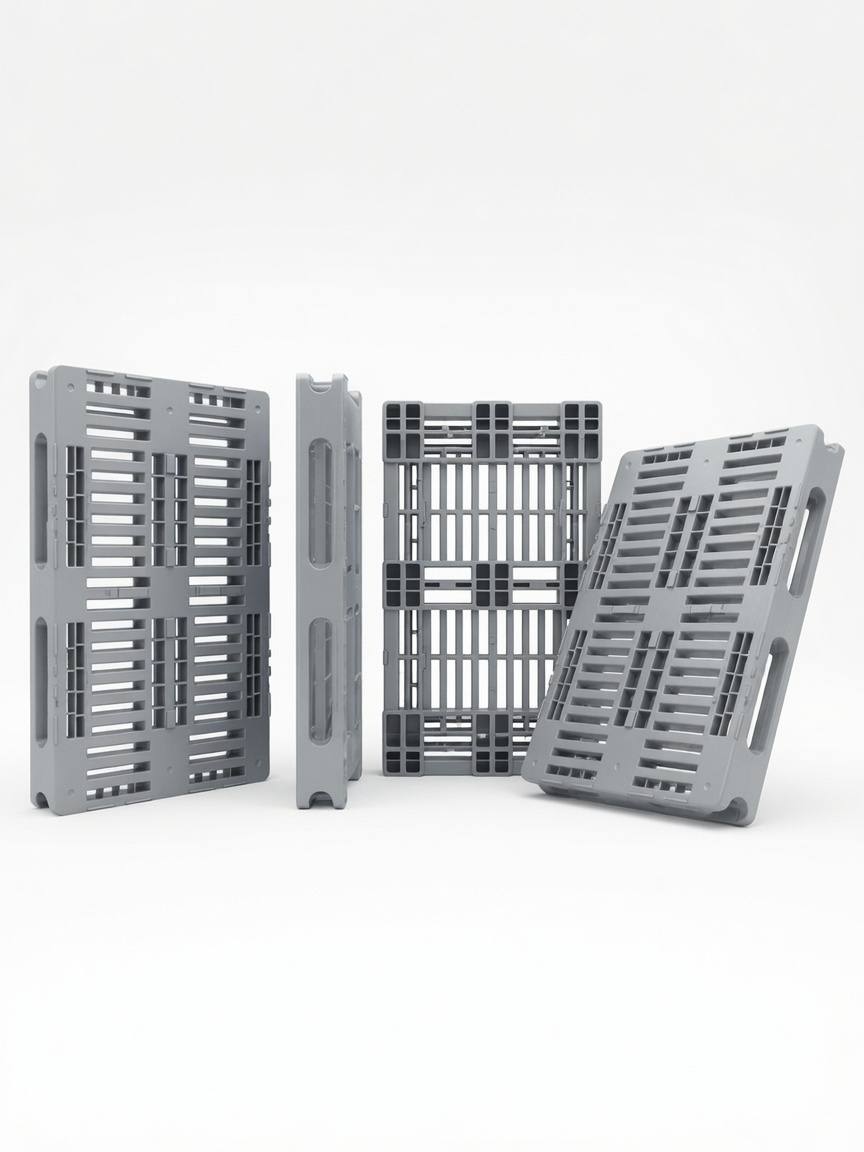
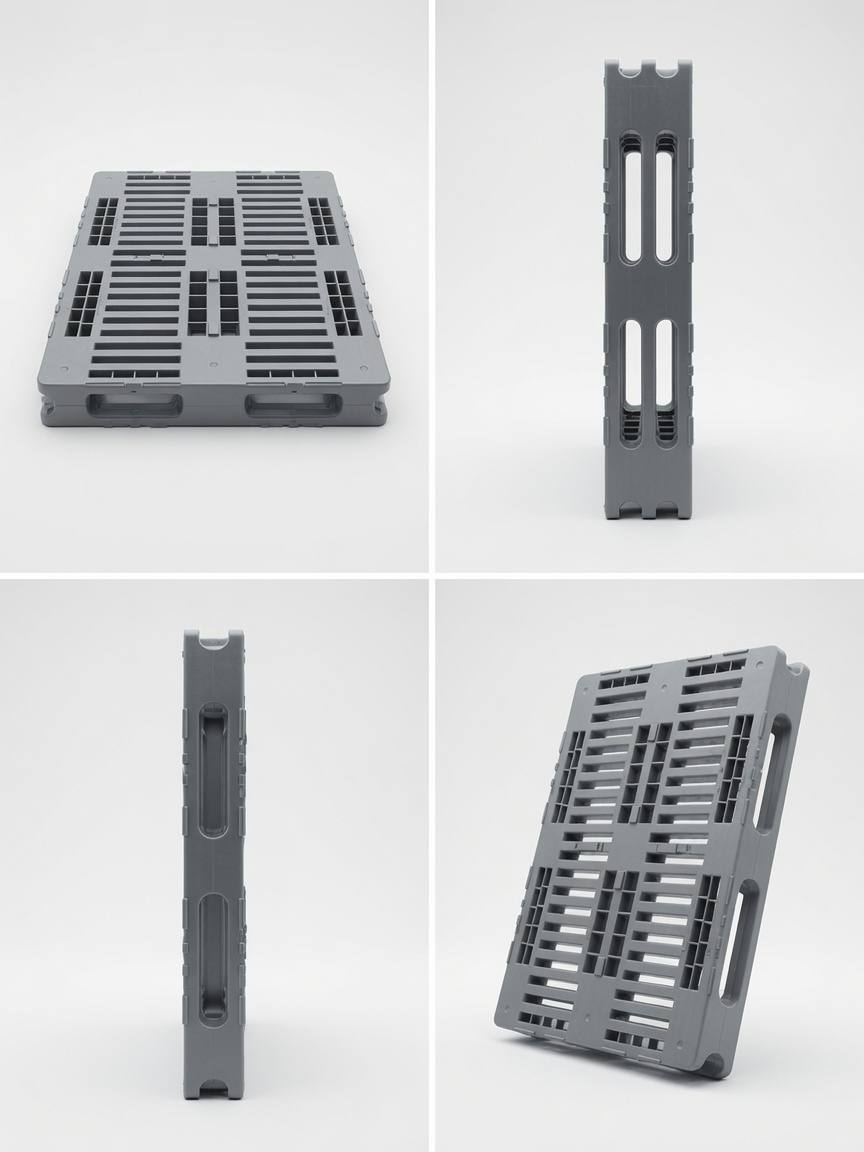
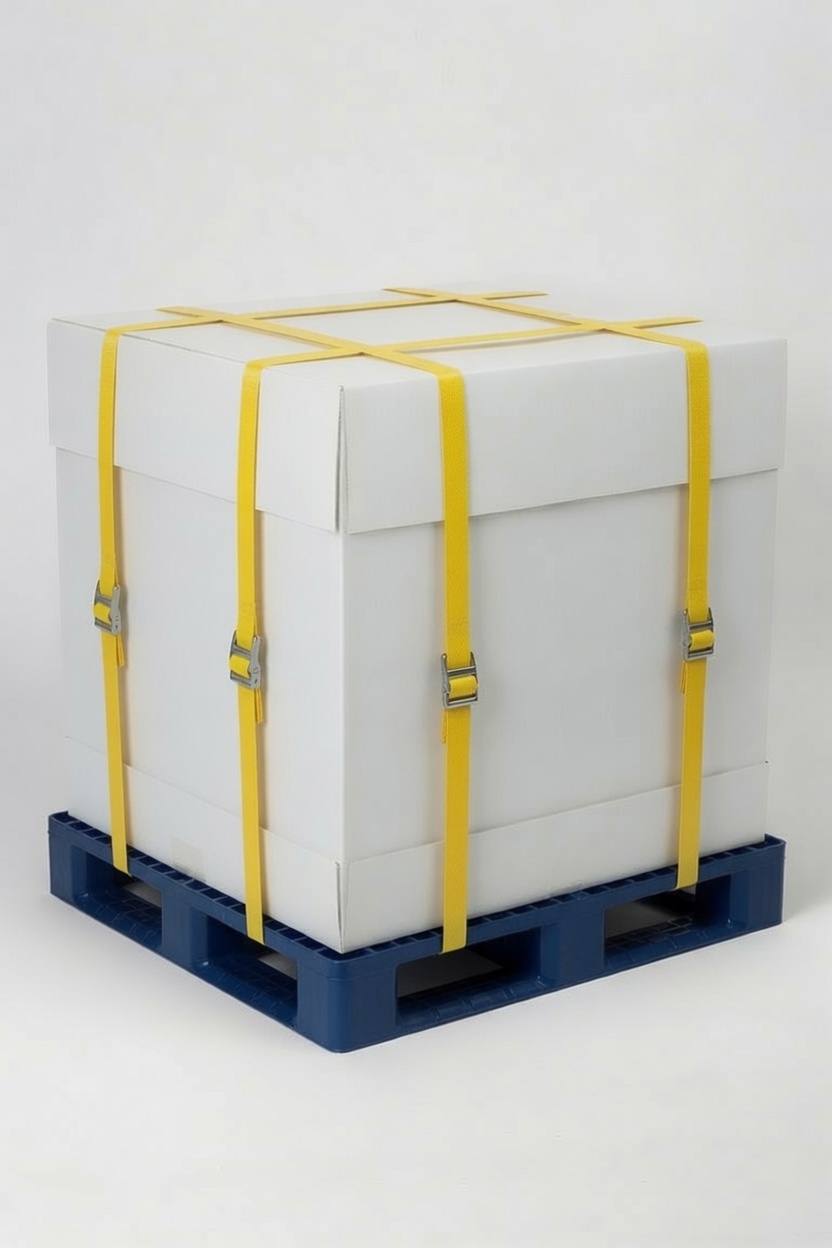
Load Ratings Explained
Pallet load ratings are not interchangeable — static, dynamic, and racking ratings each describe a different loading condition:
Static Load Rating
The maximum weight the pallet can support when stationary on a flat floor. PP corrugated pallets excel here — 10,000+ lbs static is achievable because the corrugated PP sheet distributes load efficiently across the full floor contact area. This rating matters for long-term storage where product sits on pallets for extended periods.
Dynamic Load Rating
The maximum weight the pallet can support while being moved by a forklift or pallet jack. Dynamic load is lower than static because the tines create point loads on the deck. Elipacko PP pallets are rated to 4,400 lbs dynamic. GMA wood pallets are rated similarly, but degrade with each trip — a 5-trip-old wood pallet may have significantly less than its nominal dynamic rating due to nail loosening and slat damage.
Racking Load Rating
The maximum weight the pallet can support when suspended in a rack — either on two beams (selective rack) or cantilevered in other configurations. Racking is the most demanding load condition because the pallet deck is unsupported along its width, creating bending stress. Injection-molded PP pallets rated to 2,200 lbs in racking are the correct choice for rack storage; corrugated PP pallets are better suited to floor storage.