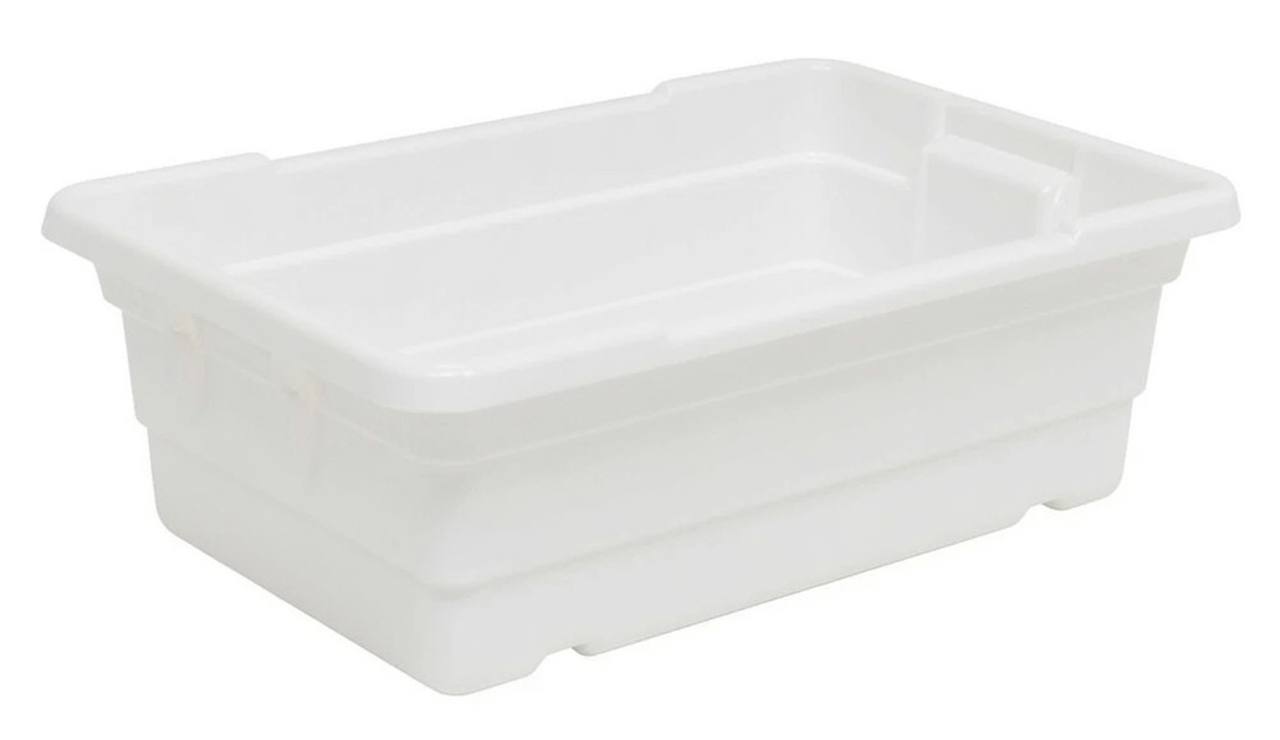
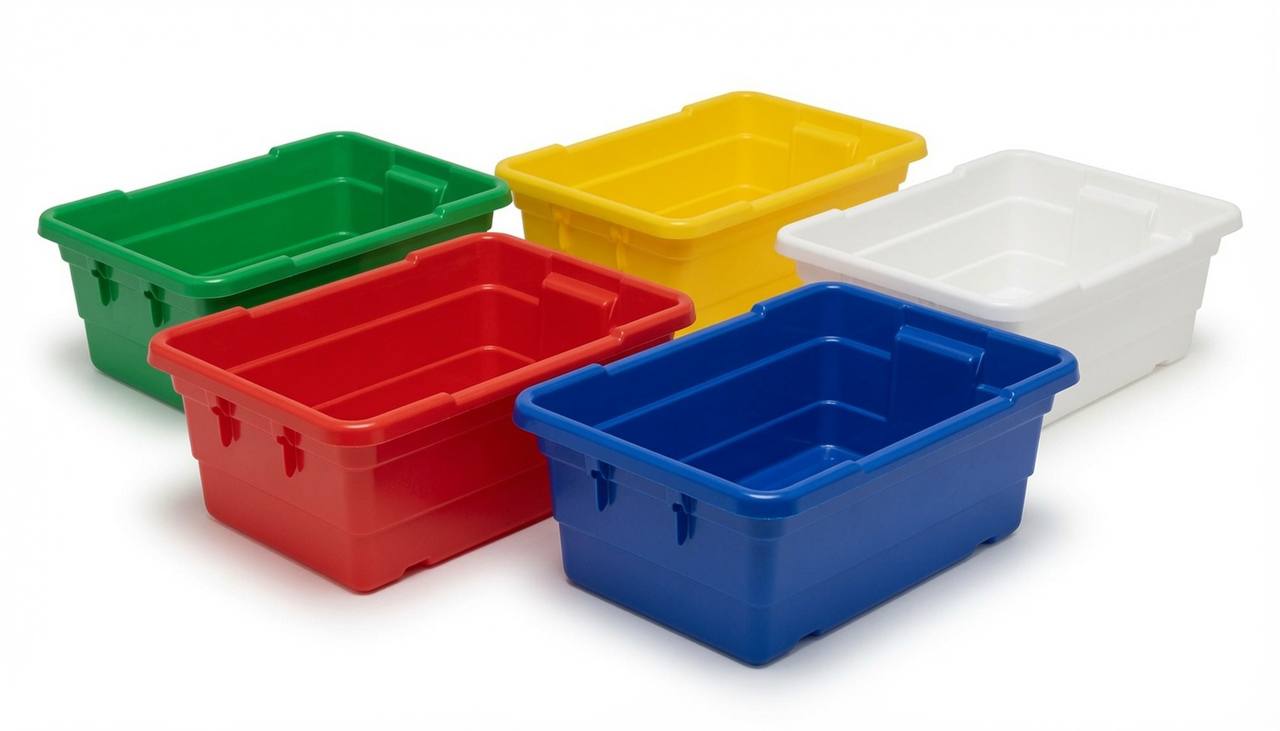
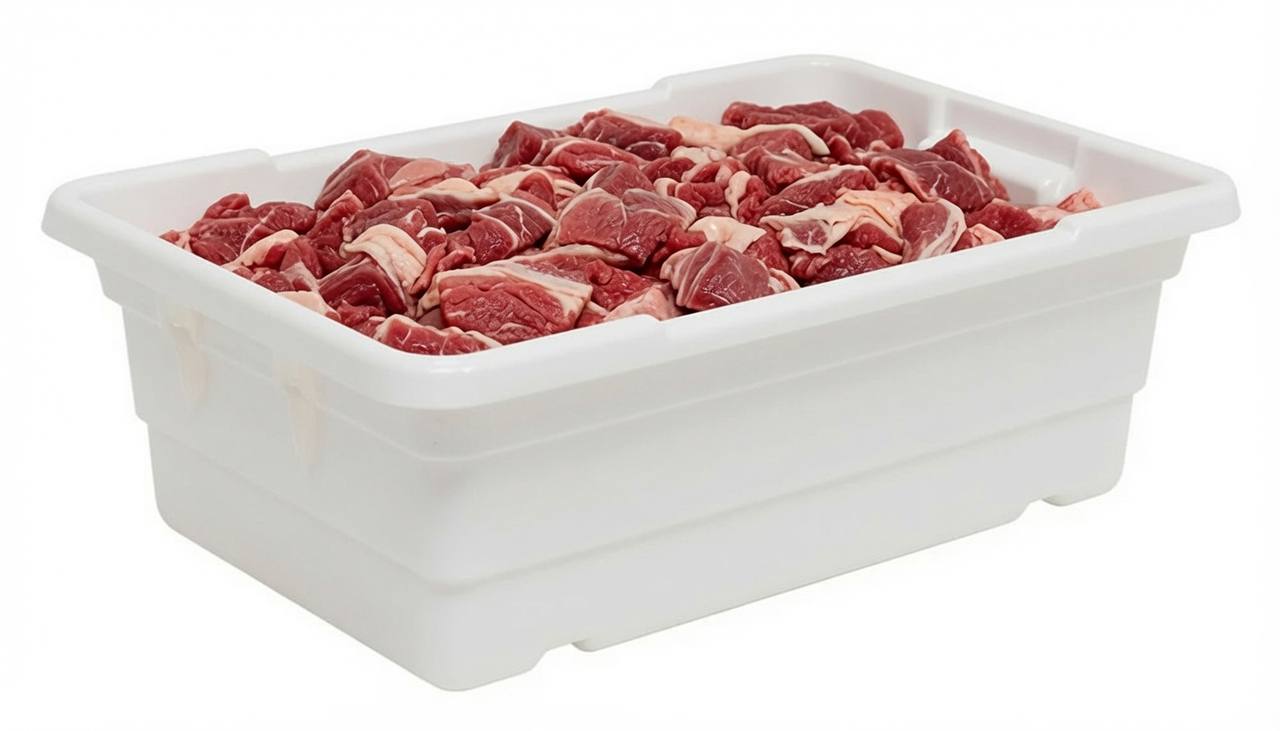
Why PP Is the Right Material for Meat Lugs
The meat processing environment is one of the most demanding in food manufacturing. Equipment is exposed to blood, fat, brine, bone fragments, high-pressure hot water, and industrial sanitizing chemicals — often multiple times per shift. The container you choose needs to survive all of it without compromising food safety.
Polypropylene (PP) handles this environment better than any other commodity plastic at a commercial price point. Here's why:
Non-Porous Surface
PP has a closed-cell molecular structure that physically prevents bacterial colonization. Unlike wood or cardboard, bacteria cannot penetrate the surface — they sit on top of it, where sanitizers can reach them. This is the fundamental reason HACCP programs can rely on PP containers for raw protein handling. Biofilm formation requires a porous substrate; PP doesn't provide one.
Chemical Resistance
The sanitizing chemicals used in USDA-regulated meat facilities — quaternary ammonium compounds (QACs), peracetic acid (PAA), chlorinated alkaline solutions, and sodium hydroxide — are all compatible with food-grade PP at normal use concentrations. PP doesn't swell, delaminate, or degrade under repeated chemical exposure the way some alternative materials do.
Thermal Range: −20°F to 180°F
Standard PP homopolymer becomes brittle at low temperatures — it's not suitable for blast-freeze applications. Elipacko meat lugs use copolymer PP, which incorporates ethylene monomer units into the polymer chain to maintain toughness at low temperatures. Copolymer PP stays impact-resistant at −20°F without becoming brittle or prone to shattering during freeze-thaw cycling.
At the hot end, 180°F hot-water sanitization cycles — the standard for USDA-compliant washdown between shifts — don't deform or warp copolymer PP lugs. The combination of cold-chain rating and hot-washdown rating is what makes PP the correct choice for the full processing chain.
FDA 21 CFR 177.1520
Food-grade PP is formulated under FDA 21 CFR 177.1520 — the federal regulation that restricts the additive package (stabilizers, colorants) to substances listed as safe for direct food contact. This is not a certification number; it's a formulation standard. When Elipacko specifies food-grade copolymer PP, the material meets this standard. Compliance documentation is available for qualifying orders to support FSMA, HACCP, and third-party audit programs.
USDA acceptance: PP is USDA-accepted for food contact surfaces in meat processing facilities inspected under USDA FSIS. No special facility approval is required beyond confirming the material is food-grade PP complying with 21 CFR 177.1520.